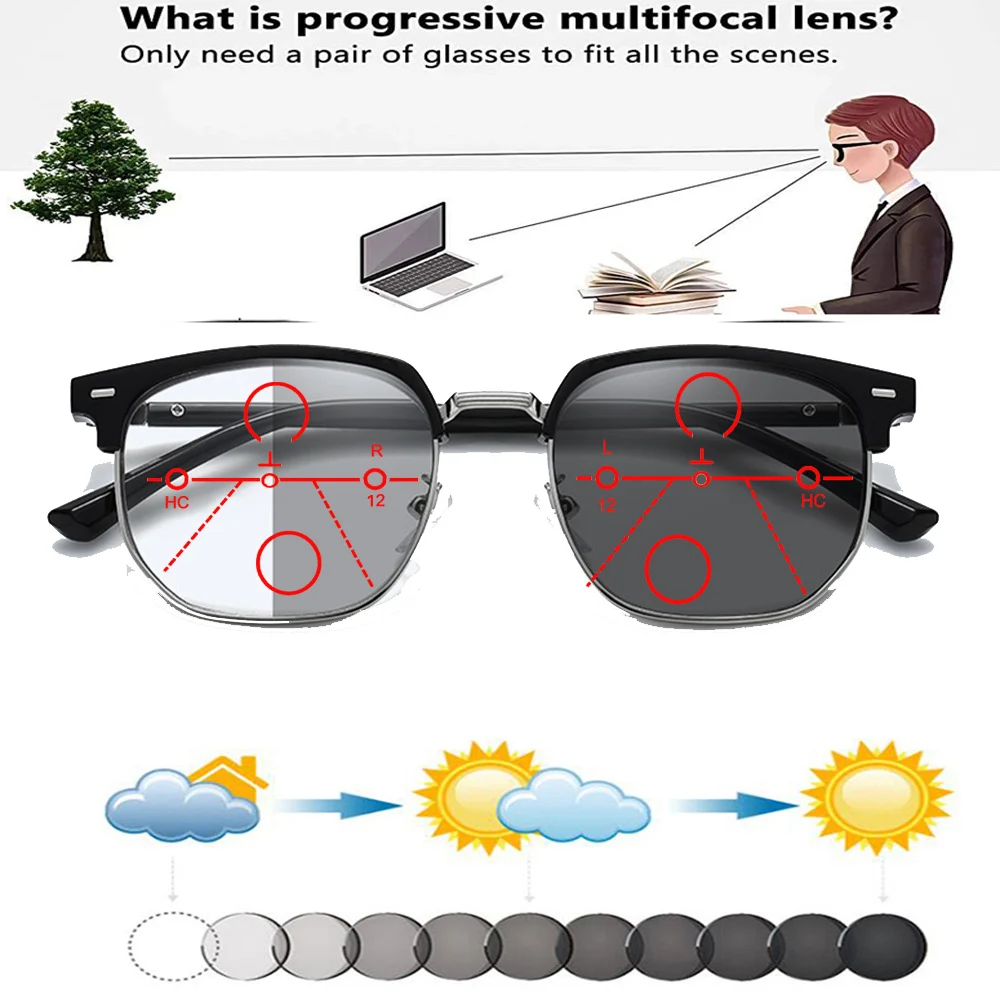
I used to fall for these myths, and they were expensive lies. I kept purchasing cheap readers that would break or fail within weeks, leaving me with a drawer full of useless plastic. I wasted over $200 before I finally understood how high-quality photochromic progressive multifocal reading sunglasses are supposed to work.
Let me set the record straight. Here’s what they don’t want you to know about buying genuine polarized reading sunglasses:
The myth goes like this: Lenses that change color (photochromic) are a nuisance. They darken as soon as you step outside, then take forever to clear up when you go back inside, leaving you looking silly wearing sunglasses indoors.
The Truth: This was accurate for older technology, and it’s still true for cheap lenses today. However, modern, high-quality photochromic lenses react much faster. They begin changing the moment you step into sunlight and start clearing up almost immediately when you move indoors. If your lenses are slow, you’ve likely purchased a low-quality product.
The benefit is enormous: you never have to switch glasses just because you walked from your car into a store.
The myth says: Progressive multifocal lenses are awful. You have to tilt your head at awkward angles just to find the reading spot, the zones feel too narrow, and they can make you feel dizzy or nauseous when you try to walk in them.
The Truth: Progressive lenses combine distance, intermediate (like for computer use), and reading power into a single lens. If they are poorly made, they can indeed be difficult to use. High-quality lenses, however, offer wide, smooth viewing fields without sudden jumps between powers. While adjustment does take some time, the lens design makes all the difference.
Adjustment is a process. You need to train your eyes to use the different zones naturally.
The myth says: Polarization is a gimmick. You only need it if you’re on the water fishing. For polarized reading sunglasses, basic UV protection should be enough.